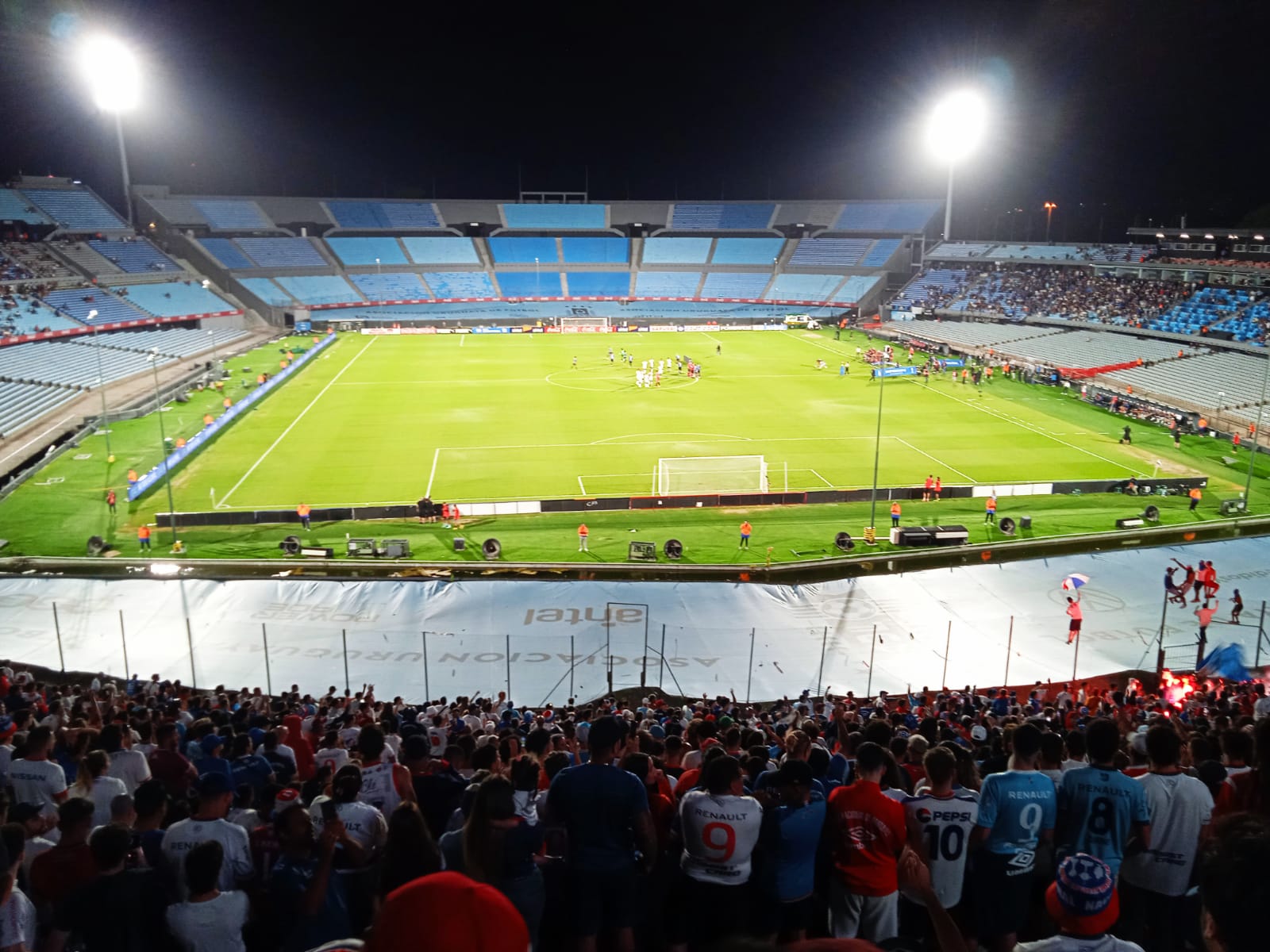
In 1983, the international football federation FIFA declared the Estadio Centenario a Historical Monument of World Football—the only one in the world. What makes the stadium so special, and how can you visit?
A colossal monument
For the untrained eye the Centenario might seem a bit of an old, worn down stadium. Sports romantics however know it is a monument with it’s own history and soul: The stadium was designed by architect Juan Antonio Scasso anTo the untrained eye, the Centenario might seem like a bit of an old, worn-down stadium. Sports romantics, however, know it is a monument with its own history and soul. The stadium was designed by architect Juan Antonio Scasso and remarkably completed in just nine months. It served as the primary stage for the 1930 World Cup, where the Uruguayan national team (the Charrúas) defeated Argentina 4–2 in the final to become the first-ever world champions.
Beyond the national team’s matches and local “Clásicos” between Peñarol and Nacional, the stadium has hosted numerous Copa América finals and major international concerts by artists like Paul McCartney, The Rolling Stones, and Roger Waters.
“Other stadiums have history; the Centenario is history itself.”
Whether you are a die-hard football fan or a casual traveler, a visit to the Centenario is essential to understanding the soul of Uruguay—a country where football is not just a sport, but a way of life.rd football fan or a casual traveler, a visit to the Centenario is essential to understanding the soul of Uruguay, a country where football is not just a sport, but a way of life.
The Olympic Tower
Centenario Stadium has its own Art Deco tower, called the Olympic Tower (Torre de los Homenajes). It rises 100 meters high and was designed by Scasso as a homage to the victories of the Uruguayan Olympic football team in 1924 (Paris) and 1928 (Amsterdam). Uruguayans like to point out that this proves they were the best in the world before the World Cup existed; they tend to forget that professional athletes (such as the British players) were not allowed to compete at the time.

The tower has nine balconies—one for every stripe on the Uruguayan flag. At the base, the Olympic Tower represents the prow of a ship, while the balconies represent the wings of an airplane. These represent the modern modes of transport that brought the world to Uruguay for the 1930 World Cup.
While the entire stadium is legendary, the Torre de los Homenajes holds a special legal status. In Uruguay, it is a National Heritage Site, meaning that while the rest of the stadium can be renovated or modernized (which is happening for the 2030 World Cup), the tower must be preserved exactly as it was built in 1930.
Visiting a game or concert
The best way to visit the Centenario Stadium is during a game. The Uruguayan national team still uses the stadium as their home. Luckily, we don’t have to wait for an international game to spot a match here: many smaller Uruguayan teams (meaning those other than Peñarol or Nacional) use the stadium when they host games in the Copa Libertadores or Sudamericana. Occasionally, smaller teams also use the Centenario to host matches against the two large clubs.

Not a football fan but still want to catch the atmosphere of the stadium? In the South American summer (January–February), there are usually concerts at the Centenario.
A quick Centenario visit
Another way to reach the stands is by visiting the Museo del Fútbol. This modest museum has a decent collection for football romantics, with objects that belonged to famous players from the golden age of Uruguayan football, such as Héctor Scarone, José Nasazzi, and Obdulio Varela.
A ticket for the museum grants entry to Tribuna Olimpica, which offers a nice impression of the stadium. Uruguayans pay $150 pesos for a ticket, foreigners have to pay $350 unfortunately.
The 1930 Bar is a recently opened café/restaurant that allows you to visit the Tribuna América for 200 pesos, with a drink included. It is a great option if you want to sit back in one of the seats with a cold beer in hand and taste the history of this iconic stadium.
Leave a Reply